
Why E-Bike Riders Should Understand MIPS Helmet Technology
As an Amazon Associate, we earn from qualifying purchases at no extra cost to you.
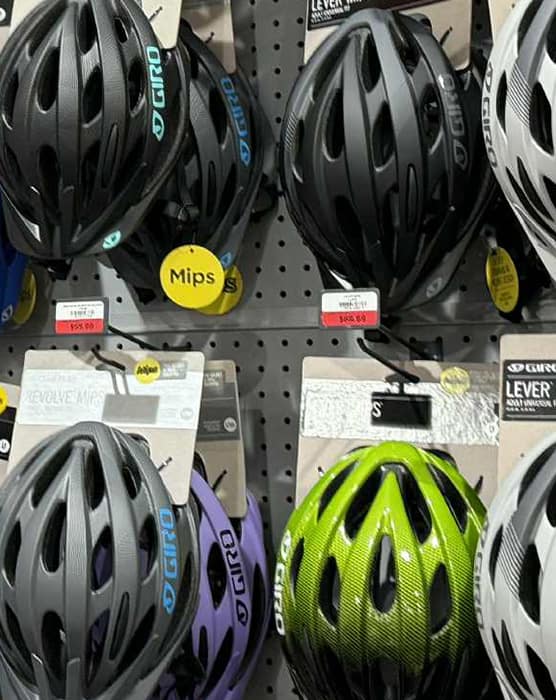
E-bike MIPS helmet technology is transforming rider safety. As e-bikes continue to rise in popularity, questions of rider safety have taken on new urgency. With higher average speeds, increased weight, and frequent use in mixed-traffic environments, e-bike accidents often involve forces that exceed those experienced in traditional cycling. These conditions demand advancements in protective gear, particularly helmets.
To understand why MIPS has become a fixture in so many helmets, we need to start with the meaning behind the name itself.
MIPS Meaning: What the Letters Stand For
MIPS stands for Multi-directional Impact Protection System. At its core, it is a safety feature built into modern helmets. Instead of relying only on foam to absorb the blow of a straight-on crash, MIPS adds a thin, low-friction layer inside the helmet.
This layer is designed to slide slightly, usually just 10 to 15 millimeters, when the helmet experiences an angled impact. That tiny shift helps redirect twisting forces that would otherwise travel directly to your head. It may not sound like much, but that slip-plane movement can make a real difference in reducing the risk of concussions or other rotational brain injuries.
The Case for MIPS Helmets on E-Bikes
A casual ride around the block is one thing, but e-bike riders face conditions that go beyond those of traditional cyclists. E-bikes can easily reach 20-28 mph, which means a fall or collision can result in much greater impact forces than a standard bike accident. And in urban traffic, car doors opening into bike lanes, or sudden stops, the risk of angled crashes rises quickly.
That’s exactly where MIPS technology comes in. Standard helmets can do well in direct, head-on impacts, but real-world crashes are often anything but straight. MIPS adds protection where you need it most, those awkward, rotational falls that happen when you’re moving fast.
Standard vs MIPS Helmets
For most e-bike and e-scooter riders, the starting point is a properly fitted bicycle helmet. MIPS is not a separate type of helmet or a legal requirement. It is one safety feature found in some helmets. Riders who want that added technology may choose a MIPS helmet. Faster commuters or riders who want more coverage may also come across NTA 8776-rated helmets made for higher-speed e-bike use.
When choosing an e-bike helmet, it helps to see the differences between a standard design and one equipped with MIPS technology. While both provide essential head protection, the details matter – especially at higher speeds or in unpredictable traffic environments. The table below offers a clear, at-a-glance comparison to help you make an informed decision.
| Comparison Point | Standard Helmet | MIPS Helmet |
|---|---|---|
| Primary Protection | Most rely on an outer shell with an EPS or EPP foam liner to absorb direct, straight-on impacts | Same shell-and-foam design, plus a slip-plane layer designed to help redirect angled impacts |
| Rotational Impact Protection | Limited in angled-impact scenarios | Designed to help reduce rotational motion from certain angled impacts |
| Weight | Often slightly lighter | Usually only a small difference, depending on model and features |
| Price Positioning | Usually lower priced | Typically costs more than a comparable standard helmet |
| Best Use Case | Recreational cycling, neighborhood rides, and casual use | E-bikes, commuting, mountain biking, and higher-speed riding |
| Visual Marker | No special indicator | Usually marked with a MIPS logo on the helmet, interior liner, or packaging |
| Availability | Available from most helmet brands | Widely available across many major helmet brands |
Helmet pricing and features can change over time based on fit systems, ventilation, visor design, and other upgrades. For current options, see our recommended helmet picks below.

How to Spot a Real MIPS Helmet
Not sure if your helmet has MIPS? The simplest way to check is to look for the small yellow dot on the back of many helmets. Some helmets may have it noted inside of the comfort padding layer and not as easily found. The packaging of the helmet should also state if it is MIPS. For additional technical details, you can also review the official MIPS FAQ page.
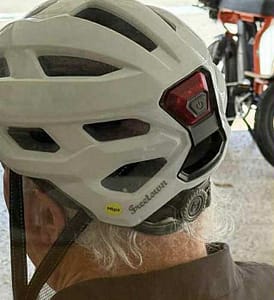
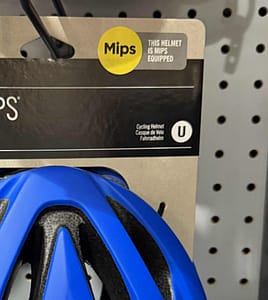
Mips yellow dot shown visible on helmet and packaging.
Are MIPS Helmets Worth It?
For casual riders at low speeds, a standard helmet still offers essential protection. But for e-bike riders facing higher speeds, heavier frames, and busier traffic, the added safety margin of e-bike MIPS helmets is hard to overlook. The cost difference is modest compared to the potential benefits, making a MIPS-equipped helmet a smart investment in both confidence and long-term protection.
If You’re Riding an E-Bike, This is the Helmet We’d Choose

Where E-Bike Helmet Technology Is Headed
MIPS has quickly moved from a premium option to the industry standard, now licensed by more than 150 helmet brands worldwide. It is one of the most widely adopted safety features in cycling, meaning a real decision for riders today is not whether to choose MIPS, but which version of the system best suits their needs.
The next wave of helmet innovation is already taking shape. Dual-layer designs like MIPS Spherical are becoming more common, while alternative approaches such as WaveCel (Trek/Bontrager) and Koroyd (Smith) reflect the industry’s broader push to reduce rotational forces in new ways. Beyond impact protection, manufacturers are also experimenting with smart features such as crash sensors, integrated lighting, and advanced materials that enhance airflow without compromising safety.
For e-bike riders, these advances point to a clear direction – helmets are evolving beyond minimum safety standards to meet the unique demands of higher speeds, heavier frames, and complex traffic environments.
Upgrades that actually help
We’ve rounded up 10 affordable e-bike and e-scooter accessories worth considering.